Executive Summary
CAR NK-cell therapy can be described as modification of NK cells with chimeric antigen receptors (CAR). By combining the specificity of CAR targeting with the natural cytotoxicity of the NK cells, CAR NK therapy offers a safer application of cellular immunotherapy. This has led to initiation of clinical trials for many CAR NK-cell therapies that are being conducted for better understanding and treatment methods.
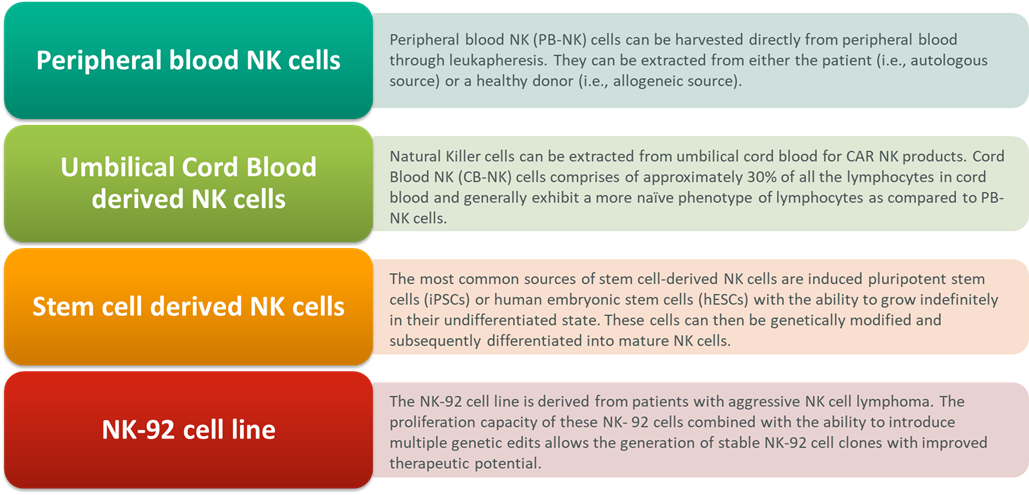
NK cells can be derived from a number of sources including peripheral blood derived NK cells, umbilical cord blood derived NK cells, stem cells derived NK cells, or from NK cell line. CAR-NK cell therapy has expanded beyond blood cancer into solid tumors as they are difficult to treat due to their tumor microenvironment that suppresses immune activity and limits infiltration. Clinical studies have demonstrated promising results in multiple types of solid tumors.
1. Introduction
Natural killer (NK) cell therapies use NK cells to detect and destroy target cells of diseases such as cancer. Early clinical studies highlight the safety of the NK cell therapies, however, the clinical success of unmodified cells is lesser. Due to short time span and tumor microenvironment NK cells struggle with solid tumors.
Modifying NK cells with chimeric antigen receptors (CARs) improve the clinical success of NK-cell therapy. CARs are cell surface structure which binds to antigens on the target cell. When these CARs are expressed on immune cells such as T cells or NK cells, they help to eliminate cancerous cells. CAR T cell therapy has shown great potential in clinical trials against some cancers, and so far seven CAR T-cell therapies have already been approved by the U.S. Food and Drug Administration (FDA).
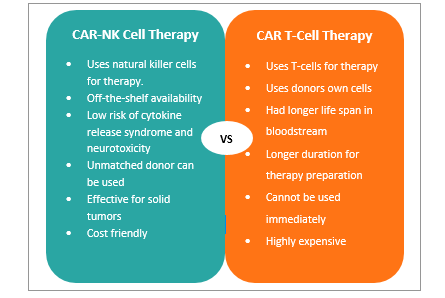
However, there still remains many challenges associated with CAR T-cell therapy, such as limited efficiency against solid tumors, potentially severe or even sometimes life-threatening side effects, lengthy manufacturing process, high cost of production, and limited scalability. It is difficult to collect sufficient number of T lymphocytes from patients who have already been heavily pretreated. Furthermore, several weeks of CAR-T cells preparation time hinders the use of this therapy for patients with rapid disease progression. Additionally, cytokine release syndrome (CRS) and neurological toxicity (NT) are the most common life-threatening adverse events of CAR-T cell therapy. All of these factors may restrict further clinical applications of CAR T-cell therapy.
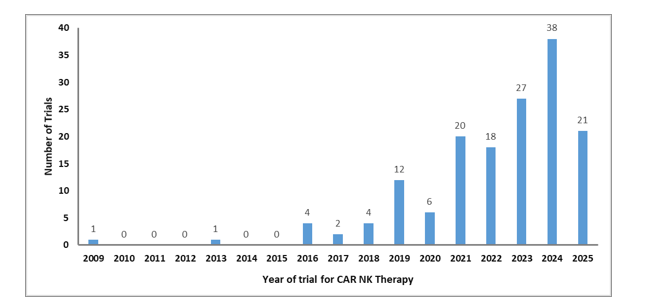
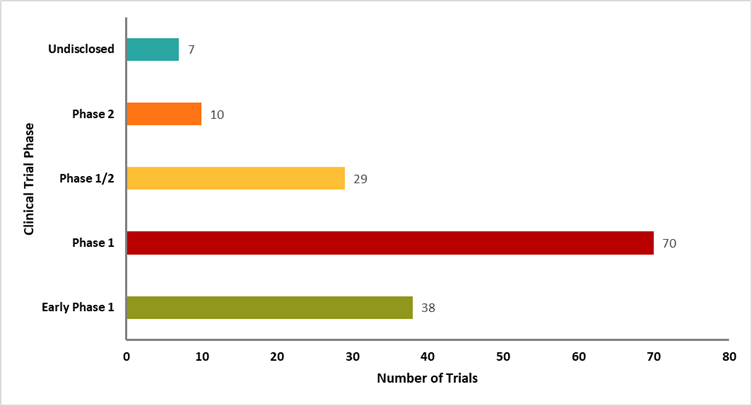
Consistent interest in CAR-NK cells has led to its use in phase I and phase II clinical trials. The details of registered clinical trials are summarized above. The first clinical trial for CAR NK cell therapy was conducted by St. Jude Children’s Research Hospital in 2009 (NCT00995137). Since then, at least 150 additional trials have been initiated. Most of the ongoing studies are in Phase I of their clinical trial, with only a few in Phase II indicating progress in the clinical trials of CAR NK-cell therapy.
2. Biology of NK cells
Natural Killer (NK) cells are a type of white blood cells and a part of the immune system. They are mainly found in the bone marrow, peripheral blood, liver, and spleen. NK cells possess a cytotoxic ability similar to those of CD8⁺ T-cells and play an important role in tumor immunology. CD8⁺ T-cells mediated cytotoxicity relies mainly on the interaction between T-cell receptors (TCR) and an antigen presented by major histocompatibility complex-I (MHC-I). NK cells have the ability to differentiate between MHC-I of healthy cells and unhealthy cells, preventing them from attacking the healthy cells. Tumor cells have the ability to down-regulate MHC-I to escape from T cell mediated cytotoxicity, while NK cells can be activated by loss of MHC-I and control the proliferation of tumor cells. This makes NK cells more specific for tumor cells and at the same time avoids off-target complications.
3. Cell Sources & Production Strategies
One of the major advantages of CAR NK therapy is the ability to use NK cells from variety of sources. Manufacturing of sufficient quality and quantity of CAR NK cells for clinical use requires good GMP-compliant protocols. Strategies that are used to manufacture CAR NK cell therapies vary according to the starting material used. The following strategies are being used:
4. Clinical Role and Potential of CAR-NK Therapy
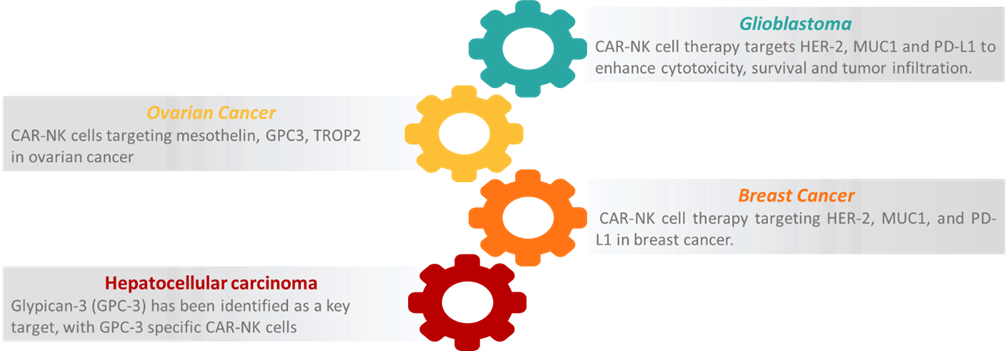
While most of the clinical trials have focused on hematologic malignancies, and other diseases, there is expanding interest in CAR-NK therapy for solid tumors. They come with a very unique challenge of hostile tumor environment that suppresses the activity of immune cells and limiting the infiltration of immune cells into the tumor mass. However, CAR-NK therapy offers several advantages in context to solid tumors as NK cells are naturally capable of homing to tumor sites and exerting cytotoxic effects. Many clinical trials are currently investigating the use of CAR-NK cells in solid tumors.
5. Clinical Evidence
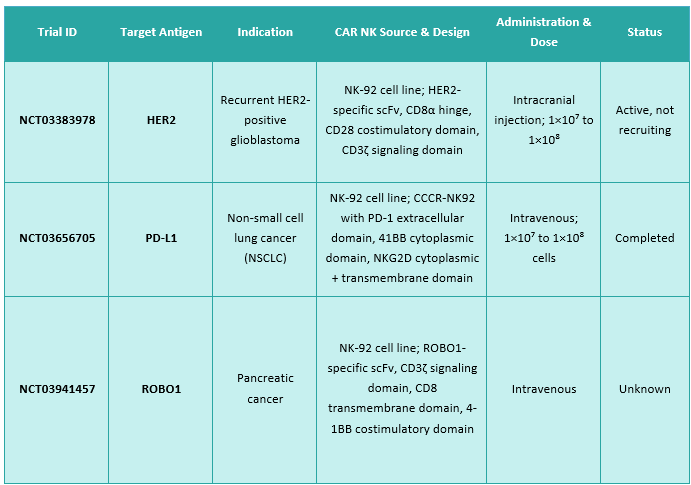
The results obtained in the clinical trials of CAR NK-cell therapy are described below. These studies provide valuable insights about the safety, efficacy, and potential of CAR NK-cell therapies across various medical conditions.
6. IP Activity in for CAR-NK cell therapy
As part of our analysis of patent activity for CAR-NK cell therapy for solid tumors, an IP landscape study was conducted to identify patents related to treatment of solid tumors using for CAR-NK cell therapy. A total of 1668 patent applications were analyzed and 753 patent applications were selected for final evaluation.
6.1 Relevant keywords, synonyms and classes used for search
- Chimeric Receptor, Chimeric Antigen Receptors, CARs, Chimeric Immunoreceptors
- NK Cells, Natural Killer Cells, Large Granular Lymphocytes
- Therapy, Treatment, Therapeutic, Cure, Intervention, Medication, Medicine
- Relevant patent classification includes C12N5/0646, A61K40/31, A61K40/15, A61K2239/47, A61K2239/53, A61K2239/55, A61K2239/56, A61K2239/50, A61K2239/52
6.2 Graphical Analysis from the identified patents (753 patent applications):
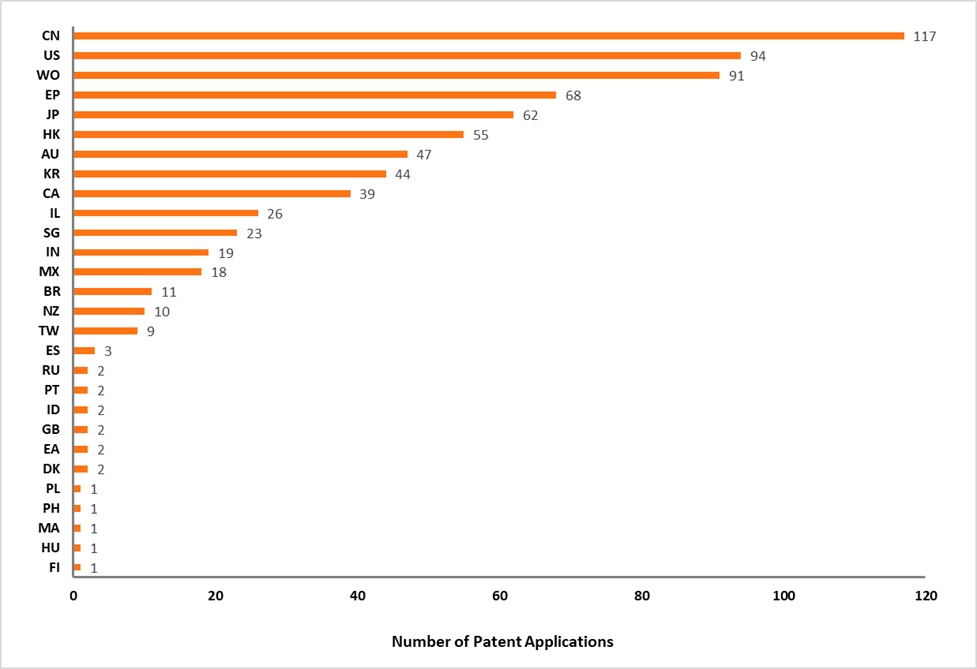
shows the distribution of patent applications across multiple jurisdictions, providing insights into major R&D locations for CAR-NK cell therapy, wherein China (CN) has most patents i.e., 117, followed by United States (US) with 94 patents.
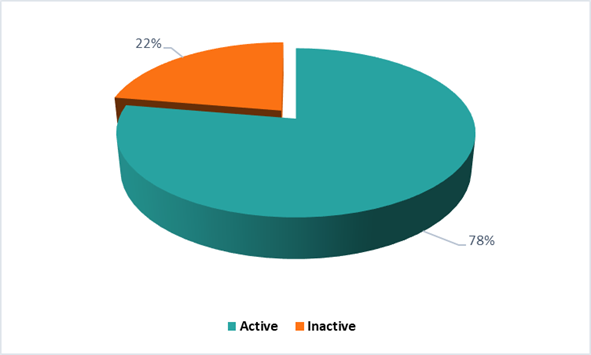
Figure 10 shows a pie chart demonstrating the legal status of total number of both active and inactive patents, with 585 patents categorized as “Active" (i.e., 78%) and 168 as “Inactive" (i.e., 22%).
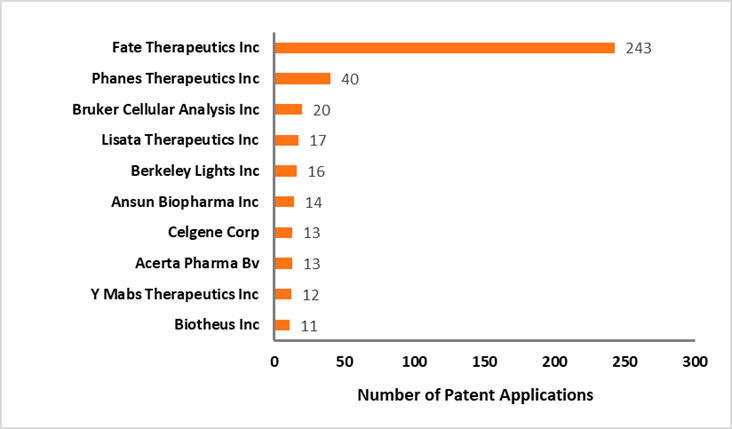
summarizes top patent assignees, with Fate Therapeutics leading with 243 patents, focusing on CAR-NK cell therapy for treatment of solid tumors. Following Fate Therapeutics is Phanes Therapeutics with 40 patents focusing on CAR-NK cell therapy for treatment of solid tumors.
7. Market and Commercial Outlook
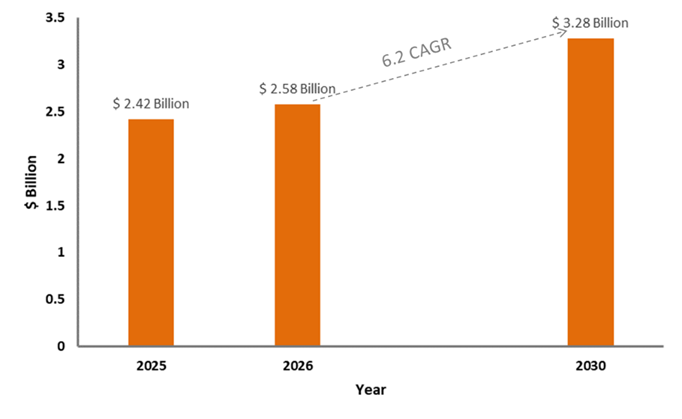
CAR-NK Cell Therapy Market Size: The CAR-NK cell therapy market size is forecast to grow from $2.42 billion in 2025 to $2.58 billion in 2026 at a compound annual growth rate (CAGR) of 6.6% and may increase to $3.28 billion in 2030 at a compound annual growth rate (CAGR) of 6.2%.
8. Conclusion and Path Forward
Natural Killer (NK) cell therapies use NK cells for detection and elimination of cancerous cells, however, due to their short life span and tumor microenvironment, they struggle with solid tumors. Modifying the NK cell’s surface with chimeric antigen receptors (CAR) on immune cells such as T cells or NK cells improves cell therapy. Seven CAR T-cell therapies have already been approved by the U.S. Food and Drug Administration (FDA).
However, they are still facing challenges such as limited efficiency against solid tumors, potentially severe or even sometimes life-threatening side effects, lengthy manufacturing process, high cost of production, and limited scalability. CAR-NK therapy genetically engineers natural killer (NK) cells to recognize and attack unhealthy cells by equipping NK cells with chimeric antigen receptors (CAR). It has now expanded beyond blood cancer into solid tumors as they are difficult to treat due to their immunosuppressive microenvironment. Evidence from clinical trials have shown promising results for many types of solid tumors in phase I as well as phase II. Clinical trials are advancing gradually moving from phase I to phase II and are anticipated to progress towards phase III positioning them for approval of CAR NK-cell therapies and then commercialization.


